
For decades, real estate development followed a predictable pattern—clear the land, level it, build anew. Trees, often seen as obstacles, were the first to go. But today, a quiet shift is underway. Across thoughtful developments, trees are no longer being removed—they are being respected, retained, and even celebrated.
This is not just an aesthetic choice. It’s a fundamental rethinking of how we live.
From Clearing Land to Curating Landscapes
In traditional developments, land was treated as a blank canvas. The fewer “interruptions,” the easier the planning. But this approach often erased decades—sometimes centuries—of natural growth in a matter of days.
Modern, conscious developers are flipping that mindset.
Instead of asking, “How do we build here?”
They’re asking, “How do we build around what already exists?”
This subtle shift changes everything. Roads bend around old trees. Villas are positioned to frame them. Open spaces are designed not as empty lawns, but as living ecosystems.
Why Retaining Trees Matters
1. Instant Maturity
You can plant a sapling, but you can’t replicate a 40-year-old tree. Mature trees bring instant character, scale, and presence to a development.
2. Microclimate Creation
Tree-rich developments are naturally cooler. Shaded pathways, filtered sunlight, and reduced heat absorption create a far more comfortable living environment—especially in rapidly warming cities.
3. Emotional Well-being
There’s a reason people instinctively gravitate toward tree-lined spaces. They calm the mind, reduce stress, and create a sense of belonging that concrete landscapes simply cannot.
4. Ecological Balance
Retained trees support birds, insects, and small ecosystems that would otherwise disappear. Developments become habitats—not just for people, but for life.
The Design Challenge (and Opportunity)
Retaining trees is not the easy route. It requires:
- Detailed site mapping before design begins
- Flexible planning instead of rigid grids
- Engineering adjustments to protect root systems
- A willingness to sacrifice short-term efficiency for long-term value
But for developers who embrace this challenge, the reward is a project that feels alive.
Not manufactured. Not imposed. But integrated.
From Landscaping to Land Stewardship
There’s a clear difference between planting trees after construction and preserving trees before it.
Landscaping often feels curated.
Tree retention feels organic.
The former decorates a project.
The latter defines it.
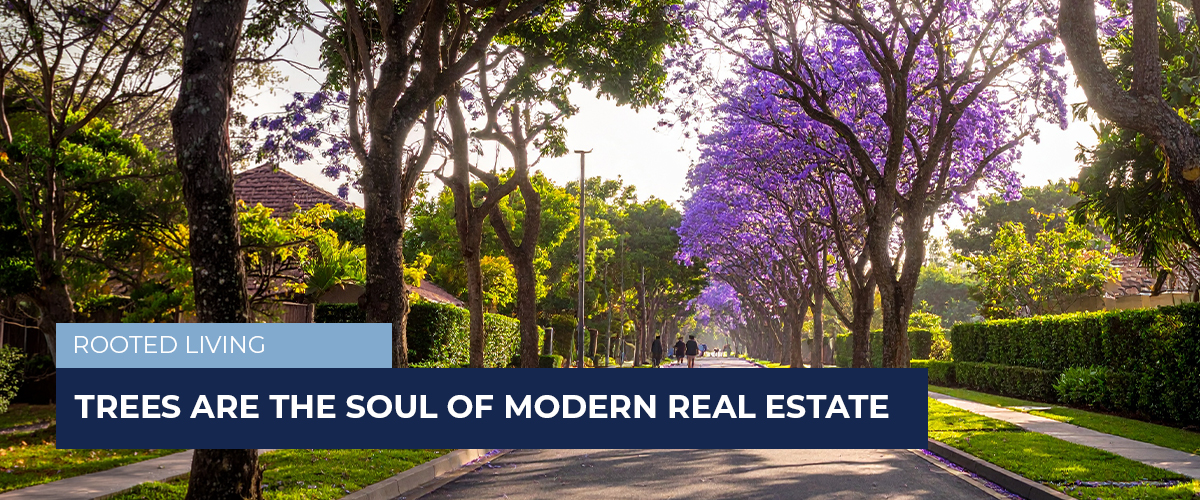
Buyers today are beginning to recognize this difference. A tree-lined avenue that existed before the project carries a different emotional weight than one planted last season.
A New Marker of Premium Living
In many ways, retained trees are becoming a new benchmark of luxury—not in the conventional sense of opulence, but in terms of experience.
- Waking up to filtered sunlight through dense canopies
- Walking under naturally shaded pathways
- Living in spaces that feel grounded and timeless
These are experiences that cannot be engineered overnight.
They must be preserved.
The Future Is Rooted
As cities expand and open land becomes scarce, the role of trees in real estate will only grow more significant. The most forward-thinking developments won’t be those that reshape land entirely—but those that work in harmony with it.
Because in the end, real estate is not just about building structures.
It’s about creating places people feel connected to.
And nothing creates that connection quite like a tree that was there long before—and will remain long after.