

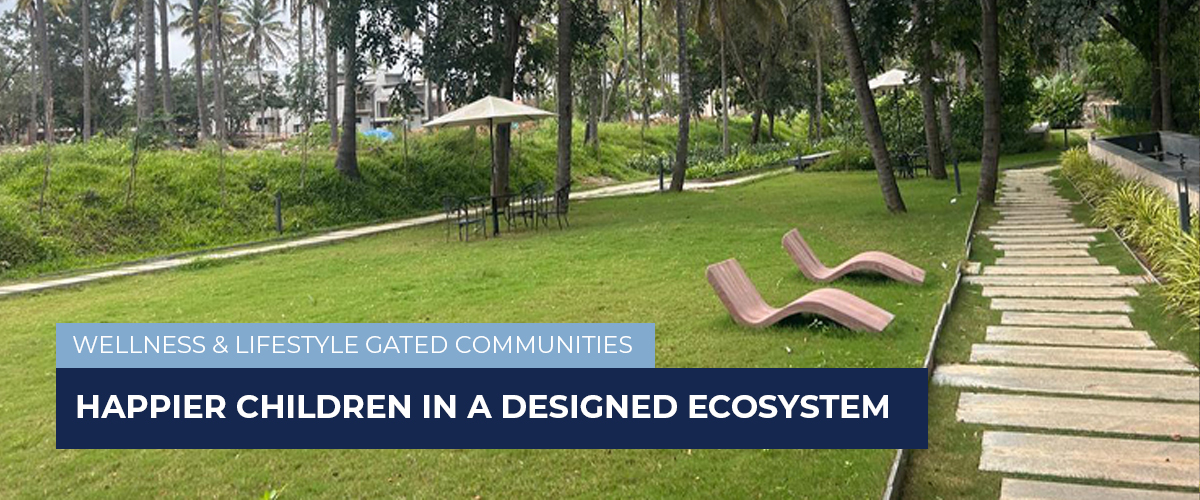
In today’s fast-paced urban environment, the idea of a “dream home” is undergoing a quiet transformation. It’s no longer just about location or luxury—it’s about well-being, community, and quality of life.
This shift has led to the rise of wellness and lifestyle gated communities—thoughtfully designed residential ecosystems that go beyond infrastructure to nurture healthier living.
For families, especially those with children, this isn’t just a lifestyle upgrade. It’s a long-term investment in how children grow, think, and interact with the world.
What Are Wellness & Lifestyle Gated Communities?
Wellness-focused communities are built around holistic living principles, integrating:
- Expansive green spaces and low-density planning
- Fitness, sports, and mindfulness zones
- Pedestrian-friendly layouts with reduced traffic
- Social infrastructure like clubhouses, co-working lounges, and hobby spaces
The result is an environment where wellness is not an activity—it’s a way of life.
Why the Environment Matters More Than Ever
Children today are growing up in increasingly digital, indoor environments. According to the World Health Organization:
- Children aged 5–17 should get at least 60 minutes of physical activity daily
- Yet, globally, over 80% of adolescents are insufficiently active
At the same time, studies by the American Academy of Pediatrics suggest:
- Excessive screen time is linked to sleep disturbances, anxiety, and reduced attention spans
This is where the design of a community begins to matter—not just aesthetically, but developmentally.
How Wellness Communities Shape Better Childhoods
1. Daily Physical Activity Becomes Effortless
Unlike traditional urban setups where play is restricted, gated communities integrate movement into everyday life.
Research published in The Lancet highlights that:
- Children with access to open play areas are 2–3 times more likely to meet daily activity recommendations
With cycling tracks, sports courts, and open lawns just steps away, children naturally adopt active, outdoor lifestyles.
2. Nature Improves Cognitive and Emotional Health
Green spaces are not just visually appealing—they are developmentally powerful.
A study by Harvard University found that:
- Children exposed to greener environments show better memory, attention, and emotional regulation
Similarly, research in Frontiers in Psychology indicates:
- Time in nature can reduce stress levels in children by up to 20–30%
In wellness communities, landscaped gardens, tree-lined avenues, and water elements become a child’s natural playground and learning environment.
3. The Community Effect: Growing Up Together
One of the most powerful—but often overlooked—advantages of gated communities is the built-in social ecosystem.
Unlike isolated apartment living, these communities foster:
- Daily peer interaction
- Shared routines and activities
- Multi-age social exposure
According to research by Stanford University:
- Children growing up in socially interactive environments develop stronger communication skills and higher emotional intelligence
What This Means in Real Life:
- Evening playgroups become routine, not planned
- Festivals and events create shared memories
- Parents form networks, creating a support system beyond family
This sense of belonging significantly enhances both childhood experience and overall lifestyle quality.
4. Reduced Screen Dependency
The design of the environment directly influences behavior.
A study from National Institutes of Health found:
- Children with access to outdoor play spaces spend 30–50% less time on screens
When children have easy access to engaging outdoor environments, screens become a choice—not a default.
5. Safety Enables Freedom
Safety is foundational to a child’s independence.
Gated communities provide:
- Controlled access and surveillance
- Traffic-free internal roads
- Designated play zones
This allows children to explore freely, which is critical for confidence-building and decision-making skills.
6. Exposure to Holistic Wellness Early in Life
Wellness communities often include:
- Yoga decks
- Meditation spaces
- Walking and reflexology paths
- Wellness centers and spas
Children growing up in such environments are naturally introduced to mindfulness, balance, and self-care habits—concepts that many adults struggle to adopt later in life.
7. Learning Beyond Classrooms
Modern amenities like:
- Libraries
- Creative studios
- Music and art rooms
- Sports academies
encourage children to discover interests organically.
This leads to well-rounded development, beyond academics and structured learning.
Lifestyle Upgrade for the Entire Family
The benefits of wellness gated communities extend beyond children.
For families, they offer:
- Strong neighborhood connections
- Opportunities for social engagement
- A sense of belonging often missing in urban life
Community events, fitness groups, and shared spaces create a lifestyle where people don’t just live next to each other—they live with each other.
A Shift from Real Estate to Life Design
The real value of a home today lies not just in its construction, but in the life it enables.
Wellness and lifestyle gated communities represent a shift toward:
- Preventive health over reactive living
- Experiences over possessions
- Community over isolation
Final Thoughts
As cities become denser and more digital, the importance of intentional living environments is only growing.
For children, especially, these communities offer something invaluable:
- Space to play
- Freedom to explore
- A community to belong to
In the end, it’s not just about buying a home—it’s about designing a childhood and a way of life.